You’ve spent your weekend crafting brilliant content, shared it across your socials, and… tumbleweeds. Meanwhile, that quick tip you threw together in five minutes is getting more engagement than your latest masterpiece.
Sound familiar? The platform algorithms focus on keeping users glued to their apps rather than sending them elsewhere.
What is Zero-Click Content?
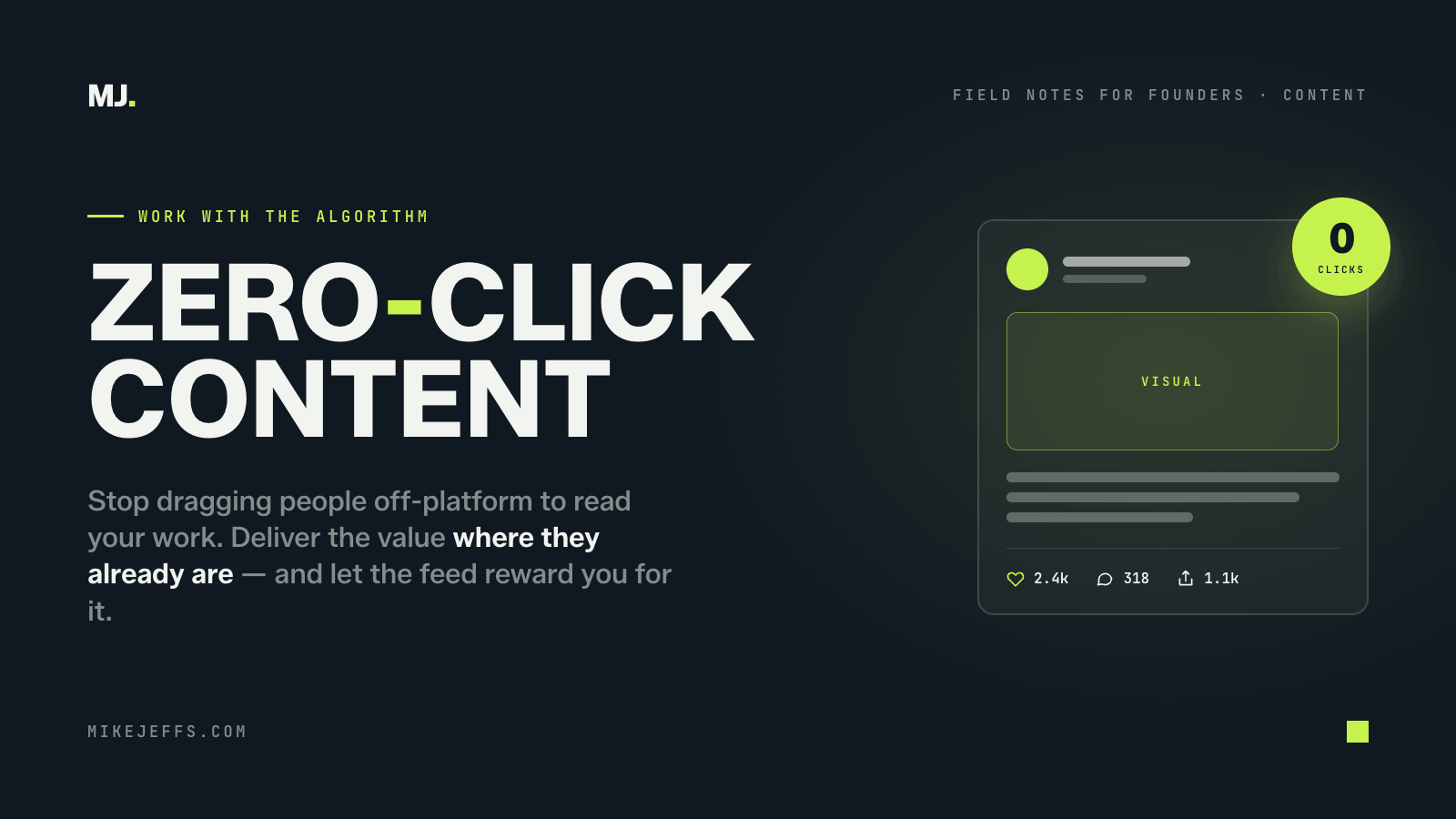
Zero-click content is exactly what it sounds like; valuable content that doesn’t require users to click through to another platform. Rather than fighting the algorithm, you’re working with it.
Instead of dragging your audience away from their preferred platform, you deliver value where they are.
The term is used by Amanda Natividad at SparkToro, but the concept isn’t new. It’s simply giving people what they want, where they want it, without the faff of link-clicking.
Why We Should Care
The algorithms aren’t playing fair. Every major platform like LinkedIn, Instagram, TikTok, even Twitter (my mistake, X) actively suppresses posts with external links. They want users scrolling, not clicking away.
Audiences are particularly click-averse. We’re a nation that queues patiently but hates unnecessary friction online. Why make someone leave their comfort zone when you don’t have to?
It builds proper brand awareness. When your content provides immediate value without strings attached, you’re not just another marketer trying to drive traffic. You’re genuinely helpful. That’s worth its weight in gold for long-term brand building.
Dark social is massive. We love a good WhatsApp group chat or sharing articles in our work Slack channels. Zero-click content travels beautifully through these private channels because it’s self-contained and immediately consumable.
Four Things That Make Zero-Click Content Work
1. Crystal Clear Communication
No waffle, no jargon, no beating around the bush. If you can’t explain your point in plain English that your grandma would understand, you’re overcomplicating it.
Every word should earn its place. Audiences appreciate brevity and clarity after all.
2. Visuals That Stop the Scroll
A decent image or graphic isn’t just nice to have – you need it. Your visual should complement your message, not compete with it.
Clean, professional, and instantly recognisable. Your brand should be evident without being shouty about it. Also the visual acts as the trigger for a user clicking into an AI answer box source.
3. Make Them Feel Something
Your content needs to land emotionally. It could be a knowing nod. It might be a gentle laugh. Maybe it’s that “finally, someone gets it” feeling.
Humour could be your secret weapon here. A bit of self-deprecation can make even the driest business topic engaging. Adding dry wit transforms it into something people actually want to read.
4. Give Them a Reason to Engage
Even zero-click content needs direction. Ask for thoughts in the comments, encourage saves, or simply get people thinking.
Keep it natural. “What’s your experience with this?” works better than “COMMENT BELOW!”
Platform-Specific Strategies
LinkedIn: The Professional’s Playground
Carousel posts work brilliantly for breaking down complex B2B concepts. “5 Budget Planning Mistakes UK SMEs Make” works if each slide dives into specifics. The content must be specific and actionable. Nobody is interested in the same content in a different jacket.
Text-only posts with strong opinions or industry observations. LinkedIn’s algorithm loves native text content, especially when it sparks discussion. Monzo do this brilliantly:
Instagram: Visual Storytelling
Story highlights for evergreen tips and guides. Create permanent resources your audience can reference without leaving the platform.
Reel tutorials that solve common problems in under 60 seconds. “How to write a proper email subject line” or “Quick VAT calculation method” – practical stuff people can actually use.
Twitter/X: Bite-Sized Wisdom
Thread breakdowns of industry reports or trends. Take that hefty McKinsey report and distil it into digestible insights.
Quote tweets with context rather than just sharing links. Add your take, challenge assumptions, provide local perspective.
TikTok: The Underestimated Business Tool
“Day in the life” content showing real marketing work. Users love authenticity and behind-the-scenes content.
Trend adaptations for business topics. Take trending audio and apply it to marketing concepts – it works better than you’d think.
Creating Zero-Click Content That Works
Start with the Hook
Your opening line needs to stop the scroll. Some approaches that work well with audiences (be aware for :
- “Unpopular opinion: [controversial but true statement]”
- “Three things I wish I’d known about [topic] five years ago”
- “Why [common practice] is actually costing you money”
Keep It Conversational
Write like you’re chatting with a colleague in the pub after work. Contractions, casual language, and the occasional “right then” or “basically” work fine.
Stick to One Point
Resist the urge to cram everything in. One solid point, well-explained, beats five rushed ideas every time.
Edit Ruthlessly
First draft: get everything down. Second draft: cut by 30%. Third draft: make it sparkle. Audiences appreciate precision.
Examples That Get It Right
The LinkedIn Carousel
Instead of linking to a blog post about “10 Email Marketing Trends,” create a carousel that reveals each trend with context and specific examples. Your audience gets immediate value, you get engagement and saves.
The Instagram Tutorial
Rather than driving traffic to your “How to Create Buyer Personas” guide, create a series of Story highlights that walk through the process step by step, using business examples rleavnt to who the content is aimed at.
The Twitter Thread
Break down that comprehensive industry report into a thread of key insights, each with specific implications for businesses. Include charts and data points as images rather than links.
Not Everything Should Be Zero-Click
Zero-click content isn’t meant to replace your comprehensive content strategy. It’s meant to enhance it.
Use zero-click content to:
- Build authority and trust
- Increase platform engagement
- Seed ideas for longer-form content
- Stay top-of-mind between major launches
But you still need places to send people when they’re ready to go deeper. Your website, newsletter, or product pages aren’t going anywhere.
Zero-click content is the appetiser that makes people hungry for the main course.
Getting Started: A Practical Framework
- Audit your existing content – what could be reformatted for platform-native consumption?
- Pick one platform to start with. LinkedIn if you’re B2B, Instagram if you’re more visual, Twitter if you’re opinion-led.
- Create a content bank – build up 10-15 pieces of zero-click content before you start posting.
- Test and measure – platform analytics will show you what’s working. Pay attention to saves, shares, and comments, not just likes.
- Iterate based on feedback – audiences are generally quite forthcoming with opinions. Use that feedback to refine your approach.
TLDR;
Zero-click content isn’t about giving away everything for free. It’s about being genuinely useful in the spaces where your audience already spends time.
In a world where everyone’s trying to drag people somewhere else, sometimes the smartest move is to simply be helpful where you are.
The platforms will reward you for it, your audience will appreciate you for it, and your business will benefit from the increased visibility and trust.
Now stop overthinking it and start creating content that actually serves your audience. They’re waiting.